A Complete Guide to Quantum Batteries: How Laser Charging Works and Why It Could Revolutionize Energy Storage
Overview
Quantum batteries represent a radical departure from traditional electrochemical cells. Instead of storing energy in chemical bonds, they exploit quantum mechanical phenomena such as superposition and entanglement to hold and release energy. Recent theoretical and experimental advances suggest that a quantum battery could be charged in a quadrillionth of a second (a femtosecond) using a precisely tuned laser, and larger prototypes might provide usable power for years after a single minute of charging. This guide explains the underlying principles, the role of laser charging, and the practical considerations for scaling these devices.
Prerequisites
To get the most out of this guide, you should have a basic familiarity with:
- Classical battery concepts – how voltage, capacity, and charging rates are defined.
- Quantum mechanics fundamentals – particularly quantum states, superposition, and entanglement (but we will recap these briefly).
- Electromagnetic theory – understanding how light (photons) interacts with matter.
No advanced mathematics is required; we focus on conceptual understanding.
Step-by-Step: Understanding the Quantum Battery Mechanism
Step 1: The Basic Idea of a Quantum Battery
A quantum battery isn't a physical container you hold in your hand – at least not yet. It is a theoretical model where a collection of quantum systems (e.g., atoms, quantum dots, or superconducting circuits) collectively absorb and store energy. The key advantage comes from collective charging: when many quantum units are prepared in a specific entangled state, they can absorb energy much faster than if they acted independently. This speed-up is analogous to superradiance in optics, where atoms emit light coherently faster than individually.
Step 2: The Role of Laser Charging
The original research shows that a femtosecond laser pulse can charge a quantum battery in a quadrillionth of a second. How? The laser provides a coherent electromagnetic field that interacts with the quantum systems. If the laser frequency matches the transition energy of the quantum units, the field drives them into an excited state. But because the units are entangled (or strongly coupled), the absorption process becomes nonlinear – the more units you have, the faster they charge up to a maximum capacity. This is the quantum advantage: charging time scales inversely with the number of units (N), whereas in classical batteries it scales linearly.
Step 3: Remote Charging Without Wires
One of the most intriguing features is remote charging. In classical wireless charging, you still need a coil and a close distance. Quantum batteries can theoretically be charged by a laser from a distance, because the laser light can be focused and directed. More fundamentally, if the quantum units are entangled across a distance, charging one part can affect the whole network. Researchers have proposed that using entangled cavities or optical fibers, you could charge a quantum battery even if it's not directly in the laser's path – the energy is transferred via quantum correlations.
Step 4: Energy Density and Longevity
Quantum batteries promise far higher energy density than conventional lithium-ion cells. Why? Because the energy is stored in the quantum states of matter, which can pack more energy per unit mass than chemical bonds. Moreover, if the system is designed to be robust against decoherence (the loss of quantum properties), the stored energy can remain for a long time – the article mentions that larger prototypes could last for years after just a minute of charging. This longevity comes from the fact that the excited quantum states, if properly isolated, have extremely long lifetimes (e.g., in atomic clocks).
Step 5: Scaling from Theory to Prototype
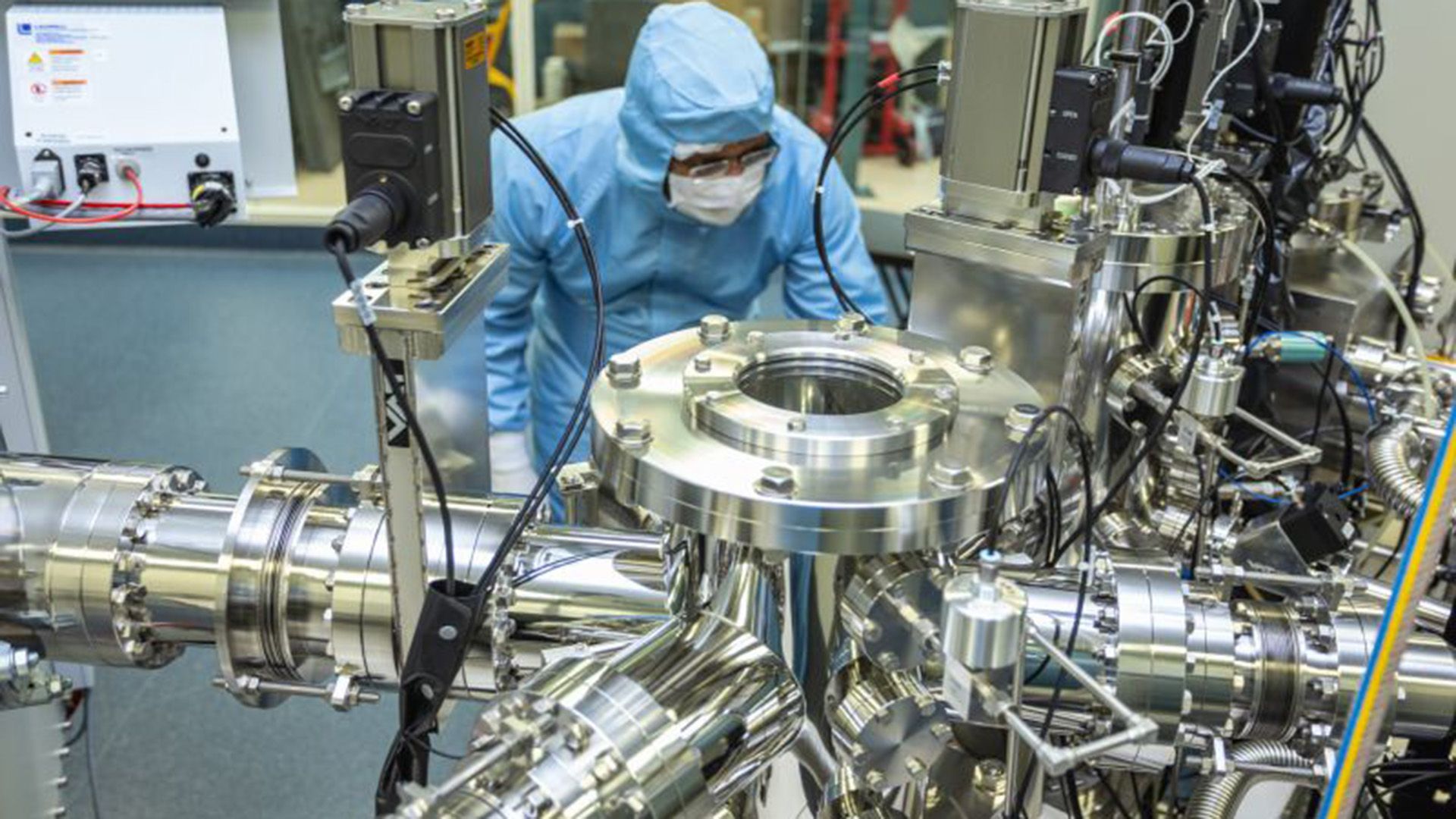
Most quantum battery research today is at the proof-of-concept scale – a few atoms or quantum dots. To reach a device that powers a phone for years, you need millions or billions of these units, all coherently coupled. This is a huge engineering challenge. However, recent experiments with laser-cooled atoms and superconducting qubits have shown the basic superradiant charging effect. The next milestone is to demonstrate a quantum battery that can be charged in a femtosecond and hold its charge for at least a few seconds (which is already a victory in the quantum world).
Common Mistakes and Misconceptions
- Confusing quantum with magic: Quantum batteries are not perpetual motion machines. Energy still comes from the laser; the quantum advantage is in the rate of charging, not in creating energy from nothing.
- Assuming entanglement is always necessary: Some quantum battery models achieve faster charging without entanglement, just using quantum coherence. Entanglement can improve it further, but it's not a strict requirement.
- Overlooking decoherence: In the real world, quantum systems interact with their environment and lose energy. A battery that charges in femtoseconds but discharges in nanoseconds is useless. Research focuses on materials with long coherence times (e.g., nuclear spins, trapped ions).
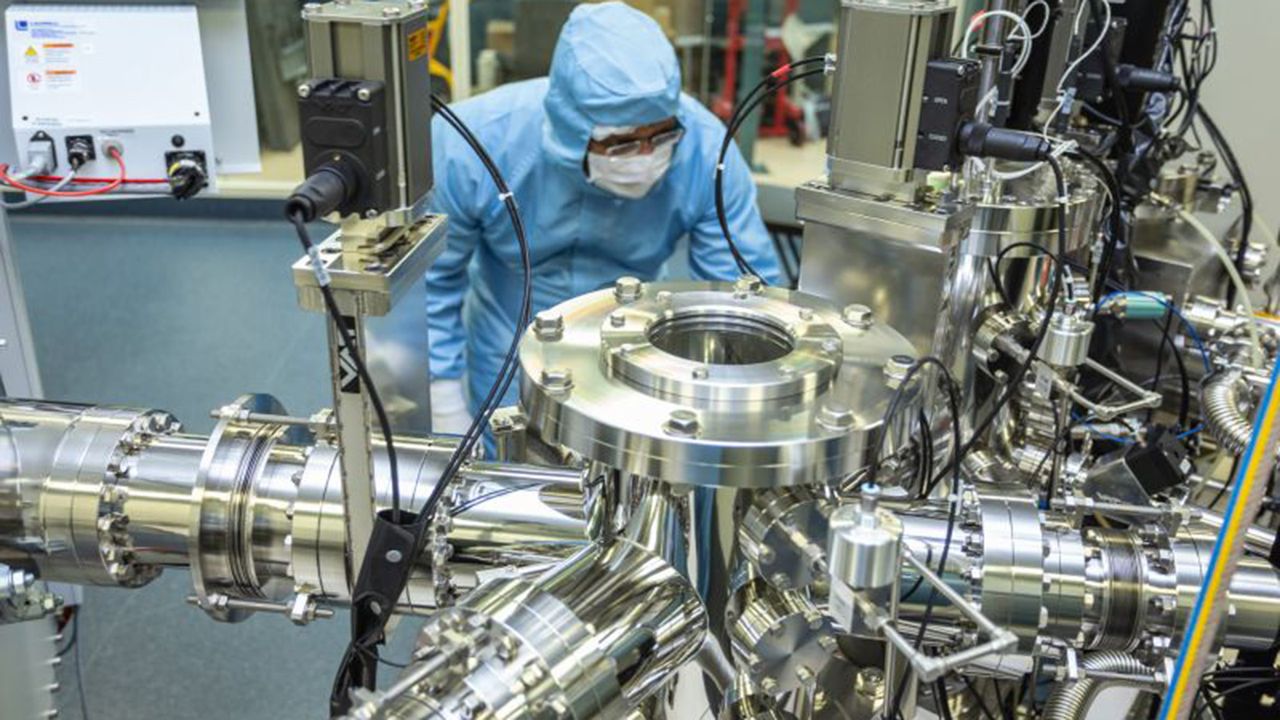
- Thinking it will replace your phone battery next year: Current prototypes exist only in labs under extreme conditions (near absolute zero, vacuum). Practical, room-temperature quantum batteries are decades away.
Summary
Quantum batteries leverage collective quantum effects to achieve ultrafast (femtosecond) charging rates via laser pulses, with the potential for remote charging and superior energy density. While the concept is scientifically sound, major engineering hurdles remain, particularly in scaling to macroscopic sizes and preserving quantum coherence. The original research highlights a charging time of a quadrillionth of a second and a possible lifespan of years after a one-minute charge – but this applies to idealized prototypes. As technology advances, quantum batteries could transform energy storage, but for now they are a fascinating glimpse into the future of power.