Meet the Pink Floyd Spider: A Tiny Wall-Dwelling Predator That Takes Down Prey Six Times Its Size
In the world of spiders, size isn’t everything. A newly described species, Pikelinia floydmuraria, proves that even the smallest hunters can be formidable. Named after the legendary rock band Pink Floyd, this tiny wall-dwelling spider has captured the attention of scientists not only for its musical namesake but also for its extraordinary hunting abilities and potential benefits to urban environments. Despite its minuscule size, it is a fierce predator capable of subduing ants six times larger than itself, and its clever web-building strategy near lights makes it a natural pest controller for mosquitoes and flies. The discovery also raises intriguing questions about its evolutionary ties to distant relatives in the Galápagos Islands.
Discovery and Naming: A Rock-Inspired Arachnid
The species Pikelinia floydmuraria was identified by a team of arachnologists studying the diverse spider fauna of South America. The genus name Pikelinia honors the naturalist E. Pikelin, while the species epithet floydmuraria is a clever blend: "floyd" pays tribute to Pink Floyd, and "muraria" refers to its preferred habitat of walls and rocky surfaces, from the Latin murus (wall). This tiny spider was first spotted in the cracks and crevices of urban buildings, where it builds its delicate webs. The researchers, charmed by its behavior and appearance, chose the name to reflect both its intriguing nature and the psychedelic, intricate patterns of Pink Floyd’s music and album art.
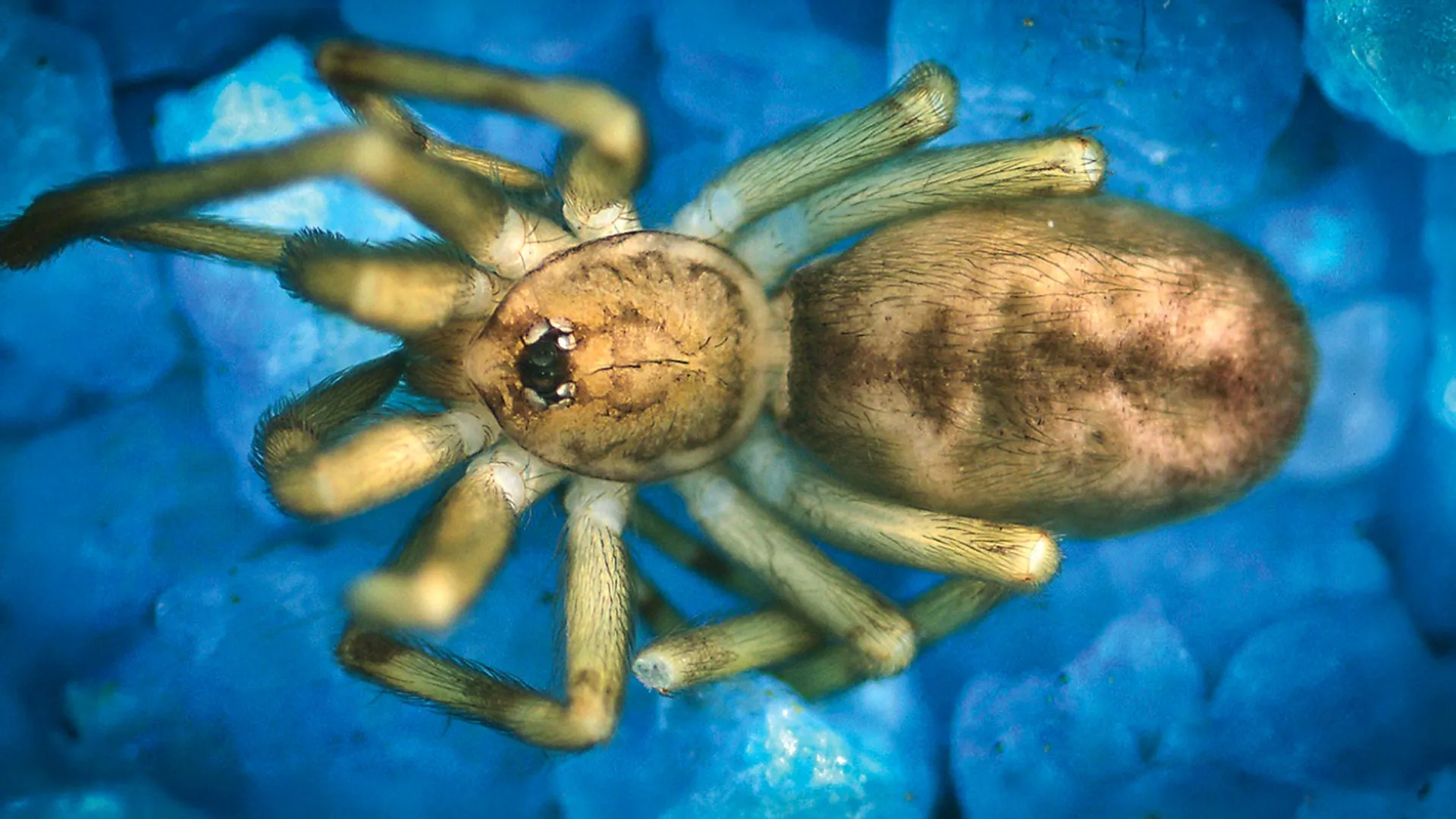
Physical Characteristics and Behavior: Small but Mighty
Size and Appearance
With a body length of just a few millimeters, P. floydmuraria is among the smallest of its genus. Its coloration often blends with stone and concrete, providing excellent camouflage. Despite its tiny stature, it possesses strong legs and sharp fangs relative to its size, enabling it to tackle surprisingly large prey.
Predatory Prowess
The spider’s most remarkable trait is its ability to hunt ants that are up to six times its own size. Using a combination of stealth, speed, and venom, it quickly immobilizes these otherwise aggressive prey. This is an exceptional feat, as ants often have powerful mandibles and can fight back. The spider’s web is not a typical orb; it is a small, irregular sheet that acts as a tripwire, alerting the spider to passing insects. It then rushes out, delivers a bite, and retreats to avoid counterattacks.
The Strategy of Building Webs Near Lights
One of the most fascinating aspects of P. floydmuraria is its preference for constructing webs near artificial lights. This is no accident—it is a strategic choice to maximize hunting efficiency. Lights attract a wide range of insects, especially nocturnal ones like moths, mosquitoes, and flies. By positioning its web in the illuminated zone, the spider enjoys a steady stream of potential prey falling into its trap. This behavior is similar to that of other synanthropic (human-adapted) spiders, but P. floydmuraria seems particularly adept at exploiting urban light sources. Researchers have observed that webs near streetlights or porch lights catch significantly more prey than those in darker corners.
Role in Pest Control: An Urban Ally
Given its appetite for common pests, P. floydmuraria may prove beneficial to households and city ecosystems. Its diet includes not only ants but also mosquitoes and flies, which are notorious for spreading diseases and causing nuisance. Since the spider thrives on walls and in small crevices, it occupies a niche that is often overlooked by larger predators. By controlling insect populations naturally, this tiny arachnid could reduce the need for chemical pesticides in urban areas. For homeowners and building managers, the presence of these spiders might actually be a sign of a healthy, balanced micro-ecosystem.
Mysterious Link to Galápagos Spiders
The discovery of P. floydmuraria also opens up evolutionary questions. Genetic analyses suggest it is closely related to a group of spiders found in the Galápagos Islands, particularly those of the genus Pikelinia that inhabit lava tubes and rocky shores. How did a wall-dwelling species on the South American mainland come to share such a close kinship with island-dwelling counterparts? This biogeographical puzzle points to ancient dispersal events, possibly via rafting on vegetation or through volcanic activity. The Galápagos connection suggests that these spiders have a long history of adapting to various rocky and man-made structures, and that their wall-dwelling behavior may be a recent adaptation to human environments. Further studies may reveal more about their evolutionary journey.
Conclusion: A Tiny Wonder with Big Implications
Pikelinia floydmuraria may be small, but its story is large. From its rock-inspired name to its formidable hunting skills and potential as a natural pest controller, this spider is a perfect example of how even the most overlooked creatures can have a significant impact on our lives. Its relationship to Galápagos spiders hints at deep evolutionary histories, while its everyday presence on our walls reminds us of the wild world still thriving in urban environments. As scientists continue to study this arachnid, they may uncover even more surprises—proving that nature’s smallest members often hold the most fascinating secrets.