Zero-Emission Cement: A Step-by-Step Guide to Eliminating Direct Process CO₂
Overview
Concrete is the most widely used construction material on Earth, but its key ingredient—cement—carries a heavy environmental price tag. Global cement production accounts for roughly 8% of all human-made carbon dioxide emissions. While energy efficiency improvements and fuel switching can reduce emissions from heating kilns, about half of cement's CO₂ footprint comes from a chemical inevitability: when limestone (calcium carbonate, CaCO₃) is heated to produce lime (CaO), carbon dioxide is released as a direct byproduct. These direct process emissions are inherent to traditional Portland cement and cannot be eliminated by cleaner energy alone.
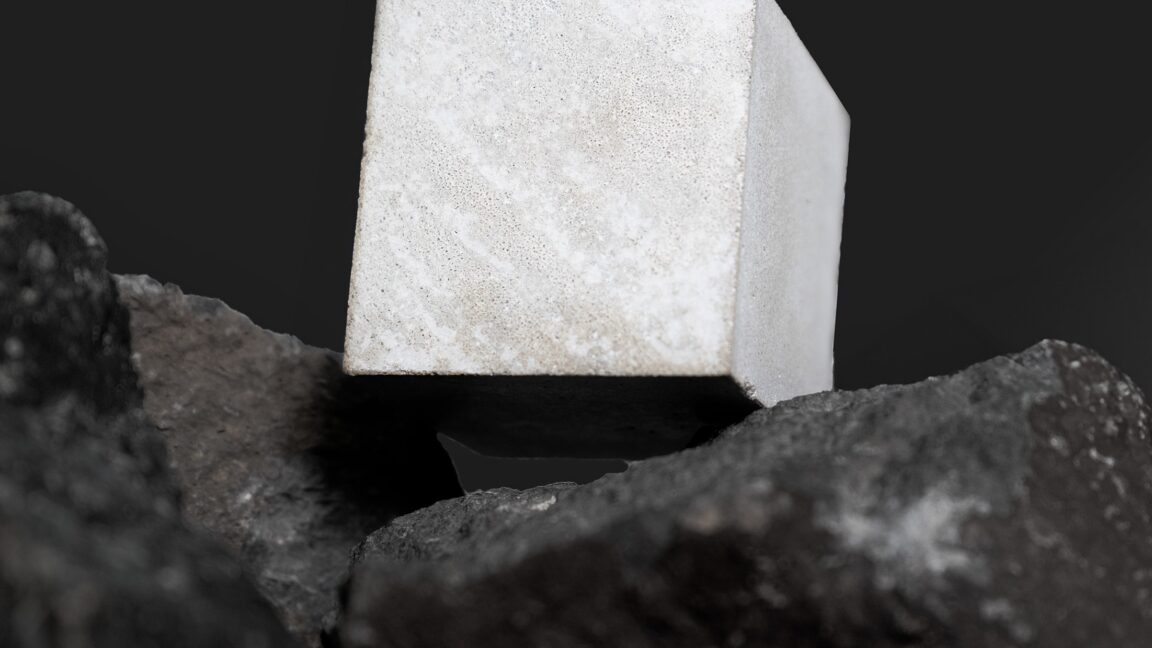
Recent research published in Communications Sustainability proposes a bold rethinking: what if we don't need limestone at all? By replacing calcium carbonate with alternative calcium sources—such as calcium silicates or other minerals that do not contain carbonate ions—we can theoretically produce cement with zero direct process CO₂ emissions. This guide walks through the underlying chemistry, the practical steps to adopt this approach, and the potential pitfalls along the way.
Prerequisites
Before diving into the cement‑making process, you should have a basic understanding of chemistry (reaction stoichiometry, the concept of carbonates) and an interest in industrial decarbonization. Familiarity with common building materials (Portland cement, lime, clinker) will help, but is not required. This guide assumes you can follow chemical equations and are comfortable with simple numeric calculations for emissions comparisons.
Step-by-Step Instructions
Step 1: Understand the Conventional Portland Cement Process
Portland cement, invented in the 1800s, is produced by heating limestone (CaCO₃) together with clay or shale at temperatures around 1450°C. The key reaction is the calcination of limestone:
CaCO₃ + heat → CaO + CO₂
For every molecule of lime produced, one molecule of CO₂ is released. In a typical cement kiln, about 60% of the CO₂ comes from this chemical reaction, while 40% comes from burning fuel to provide the heat. This is the direct process emission that cannot be avoided no matter how clean the energy source.
To see the scale: producing 1 ton of Portland cement emits roughly 0.9 tons of CO₂. Of that, ~0.5 tons are from limestone decomposition alone.
Step 2: Identify Alternative Calcium Sources with No Carbonate
The essential insight from the new research is that we can avoid the CO₂‑releasing step by using a calcium source that does not contain carbonate (CO₃²⁻) ions. Instead, use minerals where calcium is bound to silicate, aluminate, or other non‑carbonate anions. Examples include:
- Wollastonite (CaSiO₃) – a natural calcium silicate mineral.
- Bredigite (Ca₇Mg(SiO₄)₄) – a less common but promising material.
- Synthetic calcium silicates produced from industrial wastes (e.g., slag).
These materials can be heated to form reactive calcium‑silicate phases (e.g., dicalcium silicate, Ca₂SiO₄) without releasing any CO₂. The chemical reaction for wollastonite might look like:
CaSiO₃ + heat → Ca₂SiO₄ (in clinker) + SiO₂ (left in matrix)
Note that no CO₂ appears—because none was present in the starting material. The only emissions from such a process would be from the energy used to heat the kiln.
Step 3: Adjust the Kiln Process and Chemistry
Switching from limestone to alternative calcium sources changes the required kiln temperature and the chemical reactions that occur during clinker formation. In a limestone‑based process, the calcination step absorbs a large amount of energy (endothermic), which helps control temperature. With non‑carbonate minerals, the kiln may need to be operated differently.
Practical adjustments include:
- Lower preheating requirements – Because no calcination occurs, the material can be brought to clinkering temperature more directly.
- Modified raw mix ratios – The proportion of silica, alumina, and iron oxide must be recalculated to achieve the desired cement phases (alite, belite, etc.).
- Potential use of mineralizers – Small amounts of fluorides or other additives can lower the melting point, reducing energy demand.
As a simple example, consider a hypothetical recipe using wollastonite and clay. The goal is to produce C₂S (belite) instead of C₃S (alite) typically found in Portland cement. Belite‑based cements can have similar strength but lower energy requirements. The stoichiometric input would be:
2 CaSiO₃ + Al₂O₃⋅2SiO₂ (clay) → Ca₂SiO₄ + CaAl₂Si₂O₈ (anorthite) + ...
No CO₂ is released. Any remaining quartz or silicate stays inert or reacts further.
Step 4: Scale Up and Validate Performance
Laboratory‑scale success does not automatically translate to industrial production. The new cement must meet established standards (ASTM C150 or EN 197‑1) for setting time, compressive strength, and durability. When scaling:
- Perform pilot kiln trials – Test the raw material flow, clinker formation, and emissions in a scaled‑down rotary kiln.
- Characterize the clinker – Use X‑ray diffraction to confirm the formation of desired phases.
- Blend with gypsum – Just like ordinary cement, the clinker is ground with ~5% gypsum to control setting.
- Conduct lifecycle analysis (LCA) – Even though direct process emissions are zero, account for emissions from mining, transportation, and energy. If renewable energy powers the kiln, total emissions can approach zero.
For a quick emissions calculation: If the new process uses 4 GJ per ton of cement (typical), and the energy comes from green hydrogen or renewable electricity (0 kg CO₂/GJ), the total CO₂ per ton is 0 kg. Traditional cement would release 0.5 tons from the process plus 0.4 tons from fuel (if natural gas), totaling 0.9 tons.
Common Mistakes
- Assuming all calcium silicates work the same. Different minerals have different reactivities. Wollastonite may require higher temperatures than some synthetic alternatives. Always verify the phase diagram.
- Neglecting the energy balance. Even though no CO₂ is released from the raw material, the kiln still needs heat. If that heat comes from coal, total emissions may still be significant. True zero‑emission cement requires both a non‑carbonate feedstock and clean energy.
- Overlooking availability. Wollastonite is not as abundant as limestone. Large‑scale production would require new mining operations or synthetic production from other industrial byproducts. Always check the supply chain.
- Ignoring cement performance. Some alternative cements have slower strength gain or different shrinkage behavior. Test thoroughly for your intended application before substituting.
- Skipping the LCA. A process that reduces direct emissions by 50% but doubles transportation emissions due to remote mineral deposits may not be a net gain.
Summary
Eliminating direct process CO₂ from cement production is possible by replacing limestone with calcium‑bearing minerals that contain no carbonate. This guide has outlined the conventional problem, the chemical alternative, practical steps to reformulate cement, and key pitfalls to avoid. The technology is still emerging, but it offers a pathway to a near‑zero‑emission construction material without reinventing the entire industrial process.