Shalbatana Vallis: Tracing Mars' Lost Ocean Through a Chaotic Valley
Introduction
Mars, the Red Planet, continues to captivate scientists with evidence that it was once a world of water. One of the most compelling clues lies in a colossal valley near the equator—Shalbatana Vallis. Stretching roughly 1,300 kilometers, this ancient channel was carved by immense groundwater floods billions of years ago. Today, the region reveals a complex story of catastrophic floods, volcanic activity, and the possibility of a vast ocean that once covered parts of Mars. This article delves into the geologic clues that point to a wetter, warmer past for our planetary neighbor.
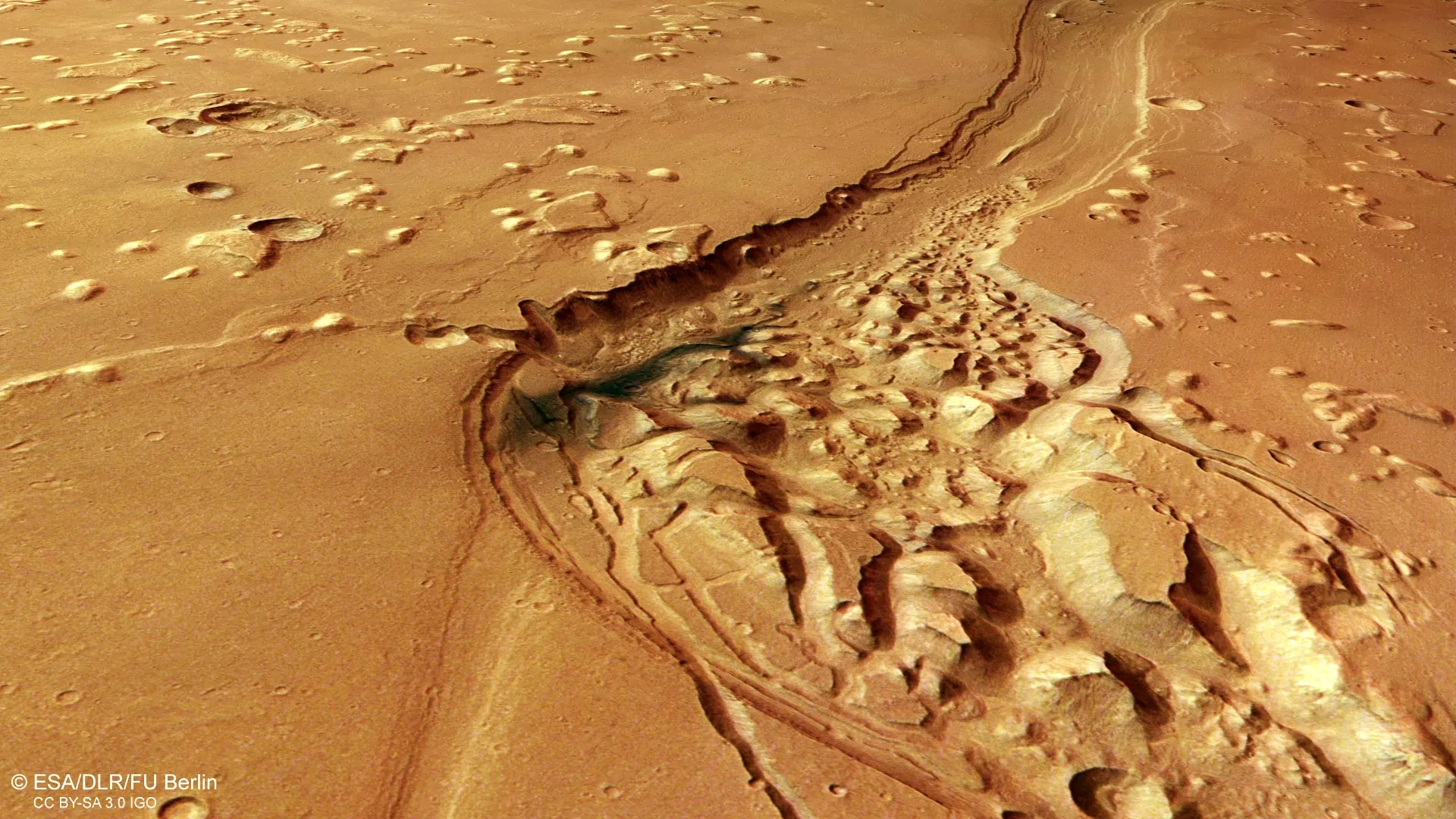
The Great Valley of Shalbatana Vallis
Shalbatana Vallis is one of the largest outflow channels on Mars, located in the southern highlands. Its winding path, deeply etched into the landscape, was formed when enormous volumes of groundwater burst onto the surface, likely triggered by volcanic or tectonic events. The valley cuts through ancient terrain, exposing layers of rock that preserve a timeline of environmental change. Researchers estimate the floods occurred roughly 3.5 billion years ago, during a period when Mars may have had a thicker atmosphere and a more temperate climate.
Chaotic Terrain: The Source of the Floods
At the head of Shalbatana Vallis lies a region known as chaotic terrain—a jumble of collapsed blocks, ridges, and depressions. This terrain is a key piece of the puzzle. Scientists believe that subsurface aquifers were suddenly released when the overlying rock fractured, perhaps due to volcanic heat or seismic activity. The resulting floods carved the valley and deposited sediments downstream. Chaotic terrain appears similar to collapse features on Earth, such as sinkholes or karst landscapes, but on a Martian scale. For a deeper explanation of how groundwater outbursts shape planetary surfaces, see the discussion on climate implications.
Evidence of an Ancient Ocean
The presence of Shalbatana Vallis and other outflow channels strongly supports the hypothesis that Mars once had a northern ocean. When the groundwater floods reached the lowlands, they would have filled basins, creating a body of water that covered much of the northern hemisphere. Ocean evidence includes shoreline features, such as terraces and beach ridges, observed in the margins of the northern plains. Additionally, mineral deposits like clays and sulfates found in valley deposits require water for their formation. The scale of Shalbatana Vallis alone suggests volumes of water comparable to Earth's largest river systems. If these floods were episodic, they could have sustained a long-lived ocean.
Volcanic and Tectonic Activity
The valley's story is not just about water. Overlying the flood scars are smooth plains interpreted as lava flows, indicating that volcanic eruptions occurred after the floods. Impact craters pockmark the surface, providing relative age estimates. Some craters are filled with volcanic ash, while others are draped by sediment. The interplay between water and volcanism may have created hydrothermal systems—a key environment for potential life. The chaotic terrain itself may have formed when magma intruded into ice-rich ground, causing melting and collapse. This dual activity makes Shalbatana Vallis a prime target for future missions seeking signs of past habitability.
What This Means for Mars' Climate History
The geologic records at Shalbatana Vallis force scientists to reconsider Mars' climate evolution. To have sustained such massive floods, the planet must have had a stable source of groundwater, likely recharged by precipitation or melting of polar ice. A thicker atmosphere would have been necessary to keep water liquid at the surface. Over billions of years, Mars lost its magnetic field and much of its atmosphere, leading to the cold, dry desert we see today. However, the valley serves as a frozen time capsule, preserving evidence of a dramatically different past. Understanding Shalbatana Vallis helps refine models of Martian water cycles and the potential for life.
Conclusion
Shalbatana Vallis is more than just a scar on the Martian surface—it is a key to unlocking the planet's watery history. From chaotic terrain to lava plains, every feature contributes to a narrative of a once-habitable world. As exploration continues, both orbiters and rovers will investigate similar sites to piece together the fate of Mars' oceans. For now, this great valley stands as a bold clue that Mars may indeed have had an ocean, and that its dramatic past is written in the rocks.