How the Vera C. Rubin Observatory Will Track Cosmic Wanderers: Asteroids, Failed Supernovas, and Interstellar Objects
Introduction
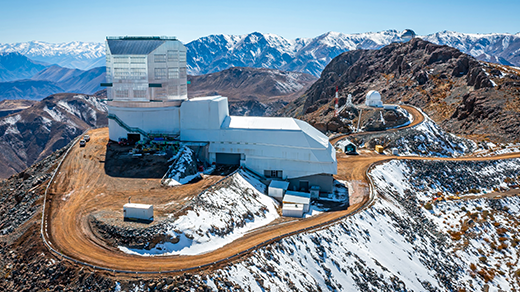
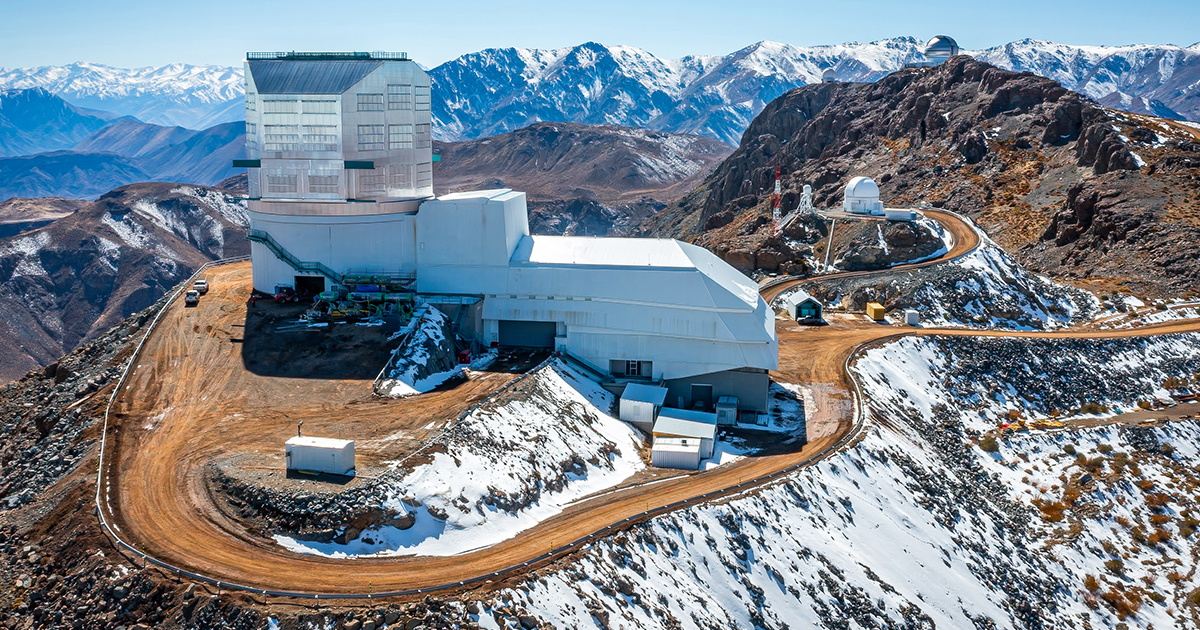
Perched high in the Chilean Atacama Desert, the Vera C. Rubin Observatory is poised to revolutionize our view of the cosmos. Originally conceived in the mid-1990s as the Dark Matter Telescope, this facility is designed to capture the universe in motion like never before. Over a decade, it will repeatedly image the entire visible sky every few nights, creating a time-lapse movie of celestial phenomena. Among its primary targets are skyscraper-sized asteroids, mysterious failed supernovas, and fleeting interstellar visitors. This guide explains step by step how the Rubin Observatory will accomplish these ambitious goals, from its advanced instrumentation to its data analysis pipelines.
What You Need
To fully understand the process, you should have:
- Basic astronomy knowledge – Familiarity with concepts like apparent magnitude, orbits, and light curves.
- An interest in survey techniques – Understanding how large-scale sky surveys work and why repetition is key.
- Patience for details – The Rubin Observatory uses complex systems; we'll break them down into digestible parts.
Step-by-Step Guide
Step 1: Design the Ultimate Sky Camera
The Rubin Observatory is built around a revolutionary 8.4-meter mirror and a 3.2-gigapixel camera – the largest digital camera ever constructed for astronomy. This combination provides an enormous field of view (3.5 degrees in diameter) and extreme sensitivity. To track objects as diverse as asteroids and supernovas, the system must capture faint, fast-moving, and transient signals. Engineers optimized the telescope's optical design for wide-field imaging, sacrificing some resolution at the center for a massive, distortion-free field. This allows each 30-second exposure to cover an area about 40 times the size of the full moon.
Step 2: Scan the Entire Sky Every Few Nights
The key to discovering moving or changing objects is repeat coverage. Rubin's survey strategy divides the sky into thousands of overlapping fields. Over the course of a decade, each patch of sky will be imaged about 800 times in six different filters (from ultraviolet to near-infrared). The telescope will take a pair of 15-second exposures back-to-back, then slew to the next field. This cadence – revisiting the same area every few nights – is what enables the detection of new asteroids, supernova candidates, and interstellar interlopers as they appear or shift position.
Step 3: Discover Skyscraper-Size Asteroids
Asteroids in the inner solar system move relative to the distant stars. Rubin's rapid revisit time means that between two images taken two nights apart, a 100-meter asteroid could shift by several pixels. Sophisticated software subtracts the static background and flags any point source that has moved significantly. To filter out noise, the system requires at least three detections consistent with an orbit. This will allow Rubin to identify potentially hazardous asteroids (PHAs) down to about 140 meters across – the size that could cause regional devastation. The observatory is expected to discover roughly 90% of all PHAs larger than 140 meters, providing critical warning for Earth defense.
Step 4: Catch Failed Supernovas
Failed supernovas are the ghostly deaths of massive stars that collapse directly into black holes without a visible supernova explosion. These events are extremely rare and difficult to spot because they lack the bright flash of a normal supernova. Rubin's deep, high-cadence imaging can detect the sudden disappearance of a star, or a brief, faint outburst. By monitoring hundreds of millions of stars over ten years, the observatory's automated transient pipeline will flag objects that vanish or dim drastically. Spectroscopic follow-ups will then confirm the candidate failed supernovas, offering unprecedented insight into the end stages of stellar evolution.
Step 5: Trap Interstellar Visitors
Objects like 'Oumuamua and Borisov have shown that our solar system occasionally hosts visitors from other star systems. Rubin's all-sky coverage and rapid cadence make it ideal for catching these fast-moving interlopers. When a new object appears with a hyperbolic orbit (indicating it is not bound to the Sun), the observatory's alert system will trigger within minutes. Because interstellar asteroids or comets are usually small and moving fast, early detection is crucial. Rubin's ability to cover the entire sky repeatedly ensures that even a brief passage will likely be captured, giving astronomers enough time to point other telescopes for detailed characterization.
Step 6: Process the Data Torrent
Each night, Rubin will generate about 20 terabytes of raw data. The observatory's dedicated data management system will process this torrent in near real-time. First, the image is calibrated and corrected for atmospheric effects. Then, source detection algorithms identify every star, galaxy, and moving object. For asteroids, the system links detections across multiple nights to compute orbits. For transients like supernovas, it compares new images with previous ones to find differences. The resulting alerts are sent to the world within 60 seconds of observation, enabling rapid follow-up. This automated pipeline is the heart of Rubin’s discovery capability.
Step 7: Verify and Follow Up
Automated detections are only the first step. Astronomers worldwide will receive alerts for high-priority candidates. For example, a candidate interstellar object will trigger immediate observation requests to other facilities like the Very Large Telescope or the Hubble Space Telescope. For failed supernovas, spectroscopic observations from large telescopes are needed to confirm the absence of typical supernova signatures. Skyscraper-sized asteroids that pose a risk are prioritized for more accurate orbit determination. The Rubin team coordinates a global network of partner observatories to ensure that every interesting find gets the attention it deserves.
Tips for Success
- Embrace the data deluge – Rubin’s success depends on fast, automated processing. Stay updated on the observatory's data release schedule and the alert broker systems (e.g., ANTARES, Lasair) that will distribute findings.
- Collaborate across disciplines – Asteroid hunters, supernova experts, and interstellar object specialists all use the same data streams. Sharing code and classifications will accelerate discoveries.
- Consider citizen science – Some of the most unusual finds (like extremely faint moving objects) may benefit from human inspection. Projects like Zooniverse are expected to partner with Rubin.
- Don't forget the weather – Even in the Atacama Desert, clear nights aren't guaranteed. The survey schedule is flexible but cloud cover can delay coverage of certain patches.
- Stay patient for the big picture – The most exciting discoveries – like a hidden asteroid swarm or a new class of failed supernova – may only become clear after years of data accumulation.