Trump Administration Dismisses All 22 Members of the National Science Board in Sudden Email Termination
Abrupt Dismantling of Science Advisory Body
In an unprecedented move, the Trump administration terminated all 22 members of the National Science Board (NSB) via a terse two-sentence email on Friday. The board, which serves as the governing body of the National Science Foundation (NSF) and as an independent advisory panel to both the president and Congress on matters of science and engineering policy, was dismissed without any official explanation. The abrupt decision has sent shockwaves through the scientific community and raises serious questions about the future of federal science oversight.
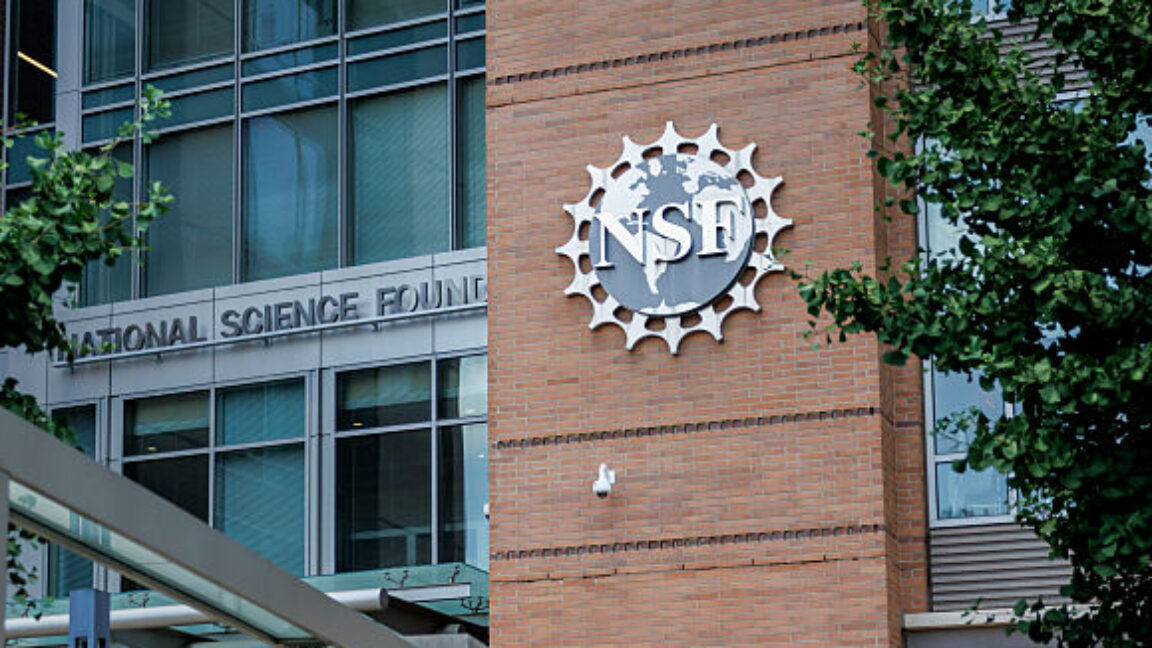
What Is the National Science Board?
Established by Congress in 1950, the National Science Board is a 24-member body appointed by the president and confirmed by the Senate. Its core responsibilities include:
- Establishing the policies of the National Science Foundation, which funds roughly 25% of all federally supported basic research at U.S. colleges and universities.
- Providing independent advice to the president and Congress on national science and engineering policy, including annual reports on the state of the U.S. science and technology enterprise.
- Overseeing the NSF director and ensuring the foundation's programs align with national priorities.
The board is traditionally composed of leading researchers, industry executives, and academic administrators. Their staggered six-year terms are designed to insulate them from political cycles. However, the mass termination effectively bypasses that structure, leaving only two vacant positions (which were already unfilled) and destroying continuity.
The Termination: A Terse Email and No Explanation
The dismissal was communicated in a brief email stating, “On behalf of President Donald J. Trump, your position on the National Science Board is terminated, effective immediately.” The message provided no reasoning, no transition plan, and no acknowledgment of the board’s statutory role. Affected members—who include renowned scientists and engineers from institutions like MIT, Stanford, and Caltech—were given no prior warning.
This move is widely seen as a severe blow to the NSF and the broader scientific enterprise in America. The board’s advisory reports are used by Congress to allocate research funding and by agencies to set strategic directions. With the entire board removed, those functions are now in limbo.
The administration has not clarified whether replacements will be nominated, leaving the NSF’s governance structure effectively paralyzed. Legal experts question whether the mass firings violate the NSF’s enabling legislation, which stipulates that members can only be removed for cause.
Impact on the National Science Foundation and U.S. Research
Immediate Disruption to NSF Governance
The NSB is responsible for approving major grants, setting funding priorities, and evaluating NSF programs. Without a board, the NSF is left without a key layer of oversight. While the NSF director (currently a political appointee) can manage day-to-day operations, critical decisions such as initiating new research centers or altering funding portfolios require board approval. This creates a dangerous vacuum.
Threat to Independent Scientific Advice
The board’s annual reports—such as the Science and Engineering Indicators—provide nonpartisan data on U.S. competitiveness in R&D, workforce trends, and educational attainment. Losing this source of independent analysis could weaken evidence-based policymaking across the executive branch and Congress.
Broader Erosion of Scientific Institutions
This termination follows a pattern of the administration sidelining scientific advisory bodies. Earlier, the President’s Council of Advisors on Science and Technology (PCAST) was also dissolved, and several EPA advisory committees were purged. Critics argue that such actions are part of a deliberate strategy to undermine independent scientific input in favor of political expediency.
Reaction from Scientists and Policymakers
The resounding response from the scientific community has been outrage. Former NSB members describe the termination as “eviscerating” the board and “an assault on independent science.” Dr. Jane Lubchenco, a former NSF director, called it “a catastrophic loss of institutional memory and expertise.”
Several members of Congress—from both parties—have also expressed concern. Senator John Cornyn (R-TX) tweeted that the move was “counterproductive.” Democratic leaders have promised investigations and hearings, though it remains uncertain whether they can compel the administration to reverse course.
Legal Concerns and What Comes Next
The NSF was established under the National Science Foundation Act of 1950, which explicitly states that NSB members serve staggered terms and “may be removed by the President only for neglect of duty or malfeasance in office.” The mass termination appears to contradict that provision, as no cause was given. Legal challenges are expected; some affected members have already consulted with attorneys about potential lawsuits.
If the firings are found to be illegal, the board members could be reinstated. However, court battles could take months or years. In the meantime, the NSF operates without its full governing body—a scenario that could delay renewal of grants for thousands of researchers across the country.
The Trump administration has not indicated any intent to nominate new members. If it does, nominees would require Senate confirmation, which is a lengthy process. This leaves a leadership void that could hamper the NSF’s ability to respond to emerging scientific challenges, from climate change to pandemic preparedness.
A Crisis for American Science
The dismissal of the entire National Science Board marks an unprecedented attack on the infrastructure of American science. By removing the board without explanation, the administration has disrupted the normal functioning of the NSF, undermined independent advisory mechanisms, and created legal uncertainty. The scientific community now faces a stark choice: accept this as a new normal or fight to restore the institutional integrity that has made U.S. research the envy of the world. For the millions of scientists, engineers, and students who rely on the NSF’s support, the stakes could not be higher.